
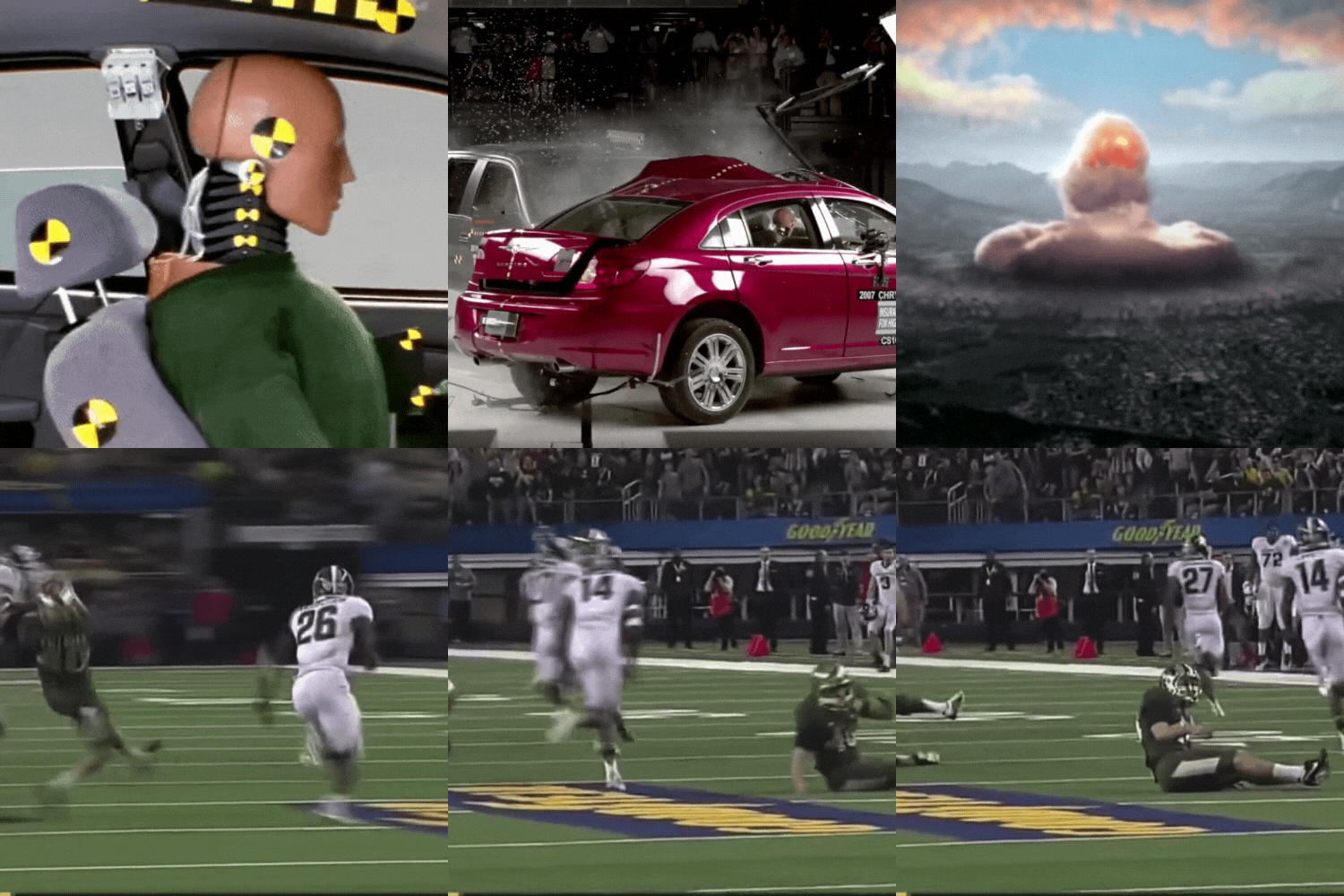
Neurology Center for Traumatic Brain Injury
Evidence-Based Diagnostic Testing and Treatment for Traumatic Brain Injury
REQUEST AN APPOINTMENT
Horizon TBI and Brain center uses state-of-the-art evidence-based protocols for diagnosing and treating Traumatic Brain Injury. Our team of physicians includes a board-certified neurologist, neuropsychologist, audiologist, psychologist, psychiatrist, and neuro-ophthalmologist.
Our goal is to help patients recover from the consequences of a TBI and improve their quality of life after suffering a traumatic brain injury.
Did you know
- According to the CDC, roughly 1.5 million Americans sustain a TBI every year.
- It is estimated that 50,000 die every year from a TBI.
- Symptoms from a head injury can be permanent.
- Head Injuries can lead to the early onset of Dementia and Alzheimer’s disease.

See How We Diagnose and Treat TBI
Evidence-based diagnosis
At Horizon TBI & Brain Center, we use evidence-based technology to diagnose and treat Traumatic Brain Injury. To diagnose a TBI, we perform a battery of testing that includes all the parameters of symptoms of Traumatic Brain Injury.
We use sophisticated computerized testing
Click on each test to read more
No Results Found
The page you requested could not be found. Try refining your search, or use the navigation above to locate the post.
These tests are crucial and allow clinicians to accurately measure critical areas of central (brain) and peripheral nerve function to provide an objective diagnosis for post-traumatic symptoms of TBI such as dizziness, vertigo, fatigue, problems with balance, coordination, blurred vision, memory problems, anxiety, depression, personality changes, and neuronal dysregulation.
These specific tests allow for proper diagnosis and the development of a care plan for patient improvement and ongoing compensatory recovery.
Evidence-based treatment
We use a technique called Electroencephalogram Neurofeedback Therapy (EEG – NFT).
Neurofeedback uses a sophisticated operant conditioning protocol, a learning method that employs positive and negative rewards. This is designed to retrain or reorganize brainwaves to help facilitate healing by utilizing visual and auditory stimuli. Our program is specific to traumatic brain injury and monitors brainwave function.
Neurofeedback encourages the neurons to communicate better, allowing for stronger neural synapses that can reduce and improve the common symptoms related to traumatic brain injury (mTBI).
This treatment aims to retrain and repair the dysregulated brainwave frequencies to allow better neuronal communication.
We typically recommend 12 neurofeedback sessions over six weeks followed by a repeat qEEG every 3 months to monitor progress and make necessary changes in treatment protocols for further treatment if needed. It’s not uncommon for some conditions to take months to years to reverse.
A follow-up qEEG and cognitive evaluation is performed to assess and document any improvement or impairment and the need for any additional treatment. Once we achieve the desired results and the qEEG reads more green patterns and less irregular brain wave patterns, the results are often permanent.
Our board-certified neurologist reviews all diagnostic testing and establishes a treatment protocol.
Blog
Learn

How common are mTBI?
MTBI is a very common injury. When a person receives proper medical care after suffering an mTBI or concussion, there...
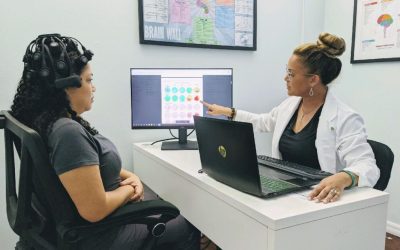
What is the Difference Between EEG and qEEG?
The difference between EEG and qEEG lies in the q. A standard electroencephalogram (EEG) records electrical activity...
When Should I Get Tested Or Evaluated For A TBI
The damage that occurs to the brain during a traumatic event is immediate. Testing can be performed either within the...